

The pitch is familiar by now. An offshore platform, a glossy interface, a track record curve that climbs from bottom-left to top-right, and a headline number that lands somewhere between three and four percent per month. The underlying technology is described as AI-driven high-frequency trading (HFT) — sometimes "quantitative arbitrage," sometimes "institutional-grade algorithmic execution," sometimes simply "automated trading."
The promise is that capital deposited into a managed account compounds at rates that, until recently, were the exclusive territory of the most secretive hedge funds in the world.
The technology is genuinely real. AI-driven high-frequency trading is among the most sophisticated activities in modern finance, and the firms operating at the highest level generate returns that many retail investors understandably admire. However, the gap between what institutional quantitative trading firms actually do and what is marketed to sophisticated retail investors under the same label is far wider than most prospective clients realise.
Understanding that gap is the difference between making an informed allocation decision and funding someone else's marketing budget.
This piece sets out what AI-driven high-frequency trading actually is, how the technology stack works, what realistic returns look like, where the legitimate retail access points sit, and how to evaluate a 3-4% monthly yield account before any capital moves.
Schedule a confidential consultation** to review how systematic trading strategies fit within your broader portfolio.**
What AI-Driven High-Frequency Trading (HFT) Actually Is
High-frequency trading is a category of algorithmic trading defined by speed, holding period, and order volume. A genuine HFT system holds positions for milliseconds to minutes, executes thousands to millions of trades per day, and competes on latency measured in microseconds and nanoseconds.
The strategies cluster into three broad families:
- Market making, in which the system simultaneously posts buy and sell orders for the same instrument and earns the bid-ask spread on each round trip
- Statistical arbitrage, which exploits short-lived price discrepancies between correlated instruments — index futures versus their underlying basket, ADRs versus their home-market shares, related ETFs
- Latency arbitrage, which profits from the brief windows during which prices on one venue have not yet caught up with prices on another
The "AI-driven" part refers to the machine learning layer that has been bolted on top of this infrastructure over the past decade. Modern HFT systems use deep learning to predict short-term order book dynamics, reinforcement learning to optimise execution paths, and natural language processing to extract sentiment from news feeds and social media in real time.
AI inference latency has now dropped below 100 microseconds, which is the threshold at which it becomes viable inside genuine HFT workflows rather than an offline research tool.
So far, so credible.
The complication is what running this kind of system actually requires.
The Real Technology Stack
A working HFT operation is closer to a particle physics lab than to a trading desk. The components that drive profitability sit well below the software layer that most retail descriptions stop at.
The core hardware involves field-programmable gate arrays (FPGAs) for order processing, kernel-bypass networking using technologies like Solarflare OpenOnload and DPDK, and co-location servers placed in the same data centres as the exchange matching engines.
Tick-to-trade times — the interval between receiving a price update and submitting an order — are now routinely under 500 nanoseconds for the leading firms. Microwave and hollow-core fibre links connect major financial centres because light travels measurably faster through air than through glass.
The infrastructure costs reflect this. Building a competitive HFT setup runs $1 million to $5 million in capital expenditure, with $50,000 to $200,000 per month in ongoing data feed, connectivity, and co-location fees. Talent is the other major cost.
The quants, low-latency engineers, and machine learning researchers who build these systems are recruited from the same pool as DeepMind and OpenAI, and compensated accordingly.
This is why genuine HFT is concentrated in a relatively small number of firms globally. The barriers to entry are not regulatory — they are economic and technical. A platform claiming to run HFT strategies on retail-deposited capital, without any of this infrastructure visible in its disclosures, is using the term in a marketing sense rather than a technical one.
What Realistic Returns Actually Look Like

Here, the numbers matter. The Medallion Fund — the most famous AI-driven quantitative trading vehicle in history — has averaged around 66% annualised returns over multiple decades. That is approximately 4.3% per month, compounded.
Medallion is closed to outside capital, charges 5-and-44 fee structures to its internal investors, and is widely considered the upper bound of what is achievable with the most advanced quantitative techniques and infrastructure in existence.
Working downward from that ceiling:
- Academic research on machine-learning trading strategies, accounting for transaction costs, slippage, and post-publication decay, finds the most sophisticated approaches deliver net out-of-sample returns of around 1.42% per month — roughly 18% annualised before fees
- Realistic AI strategy backtests typically produce 12-18% annualised returns after fees, with win rates of 55-65% and Sharpe ratios of 1.2-1.8
- Professional crypto traders in 2026 benchmark targets at 1-3% monthly with strict drawdown limits under 15%
- Renaissance Technologies' non-Medallion funds, which run similar techniques but are open to outside capital, have produced far more modest results than the flagship — and have at times lagged the S&P 500
The pattern is consistent. Sustained 3-4% monthly returns — which compound to roughly 43-60% annualised — sit at the top end of what the single most successful quant fund in history has achieved, and well above what the best machine-learning research can produce with realistic costs factored in.
Anyone offering those returns as a standard product, with low minimums and no lock-up, is either operating the most successful trading system in the world or describing something else under an HFT label.
The "something else" is usually one of four things:
| What is often marketed as HFT | What it actually is | Risk profile |
|---|---|---|
| AI-driven HFT managed account | Lower-frequency algorithmic trading using technical indicators, often on retail brokerage APIs | Real strategy risk, real drawdowns, modest realistic returns |
| Institutional arbitrage access | Crypto market-making bot running on consumer exchanges with widely available open-source code | Returns depend entirely on volatility regime; performs poorly in low-volatility periods |
| Quant fund with verified track record | Marketing entity layered over an unaudited internal book, sometimes with a Ponzi structure | High; new client deposits may fund outgoing "returns" |
| Hedge fund-grade AI strategy | A standard signal-following bot using publicly documented indicators | Real but limited; returns are nothing like the marketed figures |
Where Sophisticated Retail Investors Can Legitimately Access This
There are credible ways for a sophisticated retail investor to access genuinely AI-driven systematic trading. They tend to look different from the offshore managed account model.
Quant-focused liquid alternative funds are now offered by several major asset managers — AQR, Two Sigma's external products, Man AHL, and others. Minimum investments are typically $100,000 and above for the cleaner share classes, but the structures are regulated, audited, and the strategies are disclosed at a level that allows real due diligence. Realistic net returns sit in the 6-15% annualised range depending on the strategy, with volatility and correlation profiles that genuinely differ from long-only equity.
Multi-strategy hedge funds with allocations to systematic and quantitative sleeves are accessible to qualified investors through private bank platforms and feeder fund structures. Citadel, Millennium, Point72, and DE Shaw are the headline names; access typically requires $1 million-plus minimums and lock-up periods of months to years.
Direct platforms for sophisticated retail traders such as QuantConnect, Composer, and Alpaca allow users to build, backtest, and deploy their own algorithmic strategies. These are tools, not managed accounts, and the realistic outcome for a self-directed user is a learning curve measured in years rather than guaranteed returns. They are nonetheless the most intellectually honest entry point into the space.
AI-themed ETFs offer the most accessible exposure for investors who want some of the underlying technology exposure without the operational complexity of a managed account. They are equity products and behave as such — they do not deliver HFT-style returns, but they also do not carry HFT-style platform risk.
What credible access does not look like is: an offshore licence, a token-based deposit structure, "guaranteed" returns, withdrawals subject to approval, performance fees taken before any audit, marketing that emphasises AI buzzwords over strategy disclosure, and minimum investments calibrated specifically to retail wallet sizes.
For tailored guidance on accessing systematic and quantitative strategies through credible structures, schedule a confidential consultation.
Q&As: How to Evaluate a 3-4% Monthly Yield Account
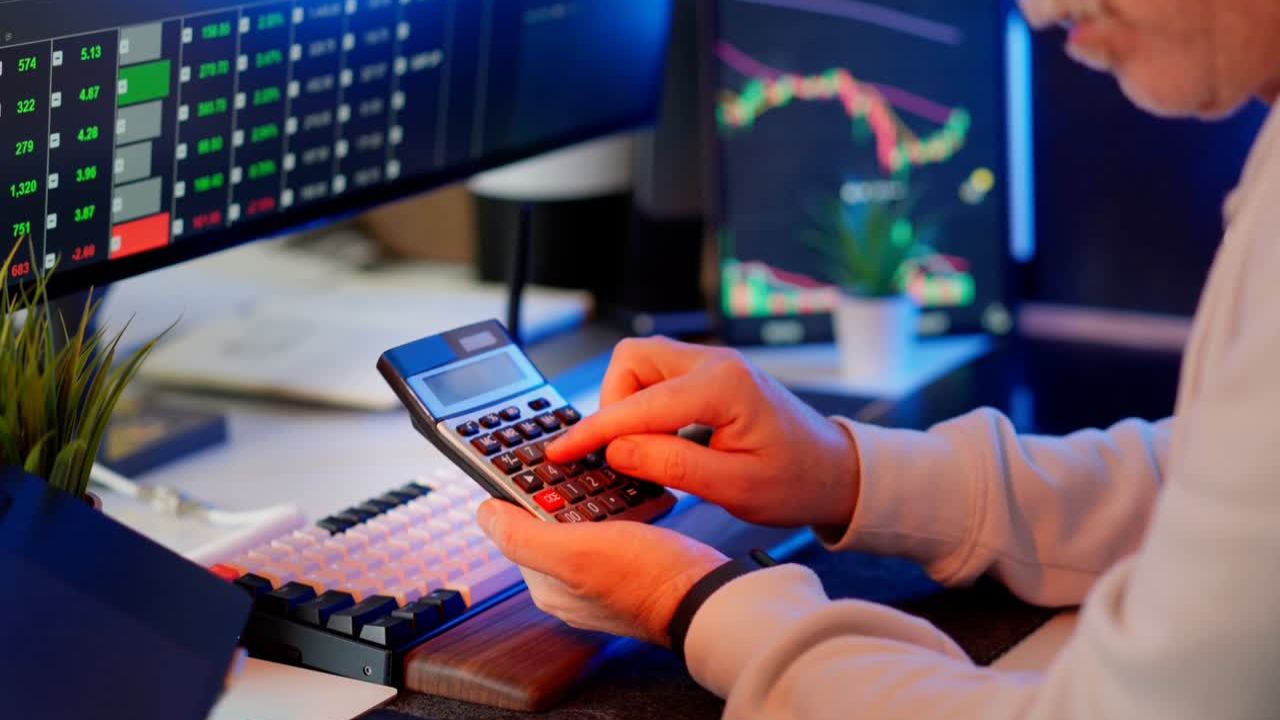
For any platform offering AI-driven HFT returns to sophisticated retail investors, the questions below sit between the marketing materials and the capital decision. Each one is straightforward to ask.
The answers separate credible infrastructure from promotional narrative.
Q. Who is the regulated entity, in which jurisdiction, and under what licence number?
A. A credible operator can name the legal entity, the regulator, and the licence number without hesitation, and the licence type should be verifiable on the regulator's public register. A small-island securities registration and a Tier 1 jurisdiction prudential licence are not equivalent, even if both technically qualify as "regulated."
Q. Who is the prime broker, and who is the custodian?
A. Real HFT operations clear through institutional prime brokers such as Goldman Sachs, Morgan Stanley, or Interactive Brokers Prime Services. Custody arrangements should sit with named, segregated, third-party institutions.
Q. Who audits the trading book, and is the auditor a recognised firm?
A. Performance reported by the same entity that holds the assets, without an independent auditor of a known name, is the single most common red flag in this category.
Q. What is the documented track record, gross and net of all fees, on a verified third-party platform?
A. Screenshots are not a track record. Audited, GIPS-compliant performance reports across a minimum of three years, including drawdowns, are.
Q. What is the worst drawdown, and how did the strategy behave during it?
A. Every real trading strategy has lost money in some period. A track record showing only positive monthly returns over multiple years, particularly across the March 2026 energy shock, is implausible.
Q. What are the actual fees, including performance, management, withdrawal, and any spread or markup taken inside the trading book?
A. The full economic cost is rarely the headline number.
Q. What are the withdrawal terms, and are there any conditions under which withdrawals can be suspended?
A. Lock-up structures are legitimate. Discretionary suspension clauses are not.
Q. What strategies are running, on which venues, and what is the source of edge?
A. "AI-driven HFT" is not an answer. "Cross-venue cash-futures basis arbitrage on CME-listed equity index products via co-located infrastructure at Equinix NY4" is.
If any of these cannot be answered specifically, the gap between the marketing and the reality is wider than the prospective return justifies.
The Honest Framing
AI-driven high-frequency trading is a real and important part of modern markets. It contributes meaningful liquidity, narrows spreads for end investors, and represents some of the most advanced applications of machine learning in any industry.
For an allocator seeking a genuinely uncorrelated return stream, quantitative strategies can be worth considering. When properly structured, they may provide systematic exposure that complements a diversified portfolio rather than simply replicating broader market risk.
What it is not is a yield product. The marketing of HFT-themed managed accounts at 3-4% monthly to retail-sophisticated investors borrows the credibility of the underlying technology without delivering the underlying substance.
The technology stack required to compete in genuine HFT is multi-million-dollar. The infrastructure is specific to a small number of co-located data centres; the strategies are constrained by physical capacity limits that mean the leading firms actively return capital to investors rather than seeking more.
None of this is reflected in the offshore managed account marketed at minimums calibrated to retail wallets.
The sophisticated retail investor is sophisticated precisely because they know to look for the gap between the story and the substance. In this category, the gap is unusually large. **The right framing is not "what AI-driven HFT can do for my portfolio at 3-4% per month" — it is "what verified, audited, regulated access to systematic trading strategies can do for my portfolio at realistic risk-adjusted returns." **
Those two questions point to very different sets of products, and only one of them holds up under independent due diligence.
Book a consultation** with our team to review how systematic and quantitative strategies might fit your portfolio, and to assess any specific platform or managed account before capital is committed.**
***The information above is based on academic research, regulatory disclosures, and institutional industry sources current to May 2026. It is intended as analytical commentary and does not constitute personalised investment advice or an evaluation of any specific product or platform. Investors should consider their own circumstances, conduct independent due diligence on any third-party platform, and consult a qualified financial advisor before making investment decisions.
This article is for general information only and does not constitute financial, legal or tax advice. Rules, prices and regulations change; verify current requirements with a qualified adviser before acting.